Ernest Griset’s THE WOLF AND THE SHEPHERDS*

Posted by jlubans on December 24, 2019  •  Leave comment (0)

null
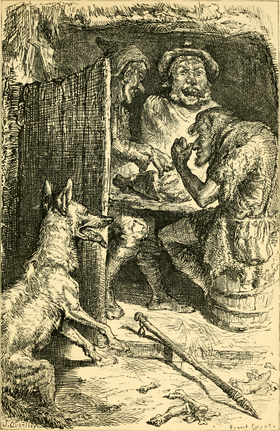
Caption: Griset’s own illustration for this fable.

A Wolf peeping into a hut where a company of Shepherds were regaling themselves on a leg of mutton, exclaimed, "What a clamour these fellows would have raised if they had caught me at such a banquet!"
Men, forsooth, are apt to condemn in others what they practice themselves without scruple.
____________
In Victorian times illustrated books of fables were popular Christmas gifts.
null
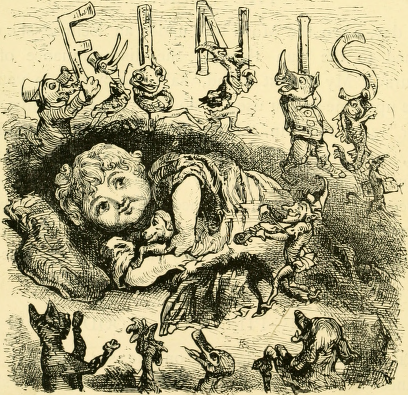
Caption: Griset's merry end illustration for his fables book.

Griset, a French born English artist, capitalized on this trend with his own book.
Why did Griset draw a raffish wolf and dissolute shepherds? What is his message?
Do not the shepherds have a “right” to feast on one of their flock or are they filching from an absent owner’s “inventory”?
If the latter, then are they not as bad as the wolf running off with the goods?
The morale may be apt. I may well engage in objectionable behavior which I rationalize as appropriate yet condemn in others.
Aesop speaks to this in his Jupiter and the Two Sacks fable. We each wear two sacks – one visibly on the front of other’s people’s faults and a sack on the back – out of sight - full of our own failings.

*Source: Aesop's fables by Aesop; Griset, Ernest Henry, 1844-1907
London ; New York : Cassell, Petter, and Galpin 1874


© Copyright John Lubans 2019

Ernest Griset’s THE WOLF AND THE SHEPHERDS* Redux.

Posted by jlubans on May 12, 2021  •  Leave comment (0)

null
Caption: Griset’s (1844-1907) very own illustration.

A Wolf peeping into a hut where a company of Shepherds were regaling themselves on a leg of mutton, exclaimed, "What a clamour these fellows would have raised if they had caught me at such a banquet!"
Men, forsooth, are apt to condemn in others what they practice themselves without scruple.
____________
I first posted this fable – all about hypocrisy - in late 2019.
Have you noticed that much of the daily parade of commentary on FCBK and other anti-social media - whenever it strays from cats, dogs, grandkids, flowers and vacation photos - is, as I put it a while back, “ignorant, one-sided, negative, absolutely certain, ill-humored, repetitive (think ‘meme’ and ‘sharing’) and unforgiving?”
Today’s moral, “Men, forsooth, are apt to condemn in others what they practice themselves without scruple” is especially relevant right now.
I can justify objectionable behavior by people I like but become outraged when it’s perpetrated by people I despise.
Aesop speaks to this in his Jupiter and the Two Sacks fable. We each wear two sacks – one visibly on the front of other’s people’s faults and a sack on the back – out of sight - full of our own failings.

*Source: Aesop's fables by Aesop; Griset, Ernest Henry, 1844-1907
London ; New York : Cassell, Petter, and Galpin 1874

© Copyright John Lubans 2021

Ernest Griset’s THE OWLS, THE BATS, AND THE SUN*

Posted by jlubans on June 26, 2021  •  Leave comment (0)

null
Caption: Illustration by Griset, 1874

The Owls, Bats, and several ether birds of night were on a certain day got together in a thick shade, where they abused their neighbours in a very sociable manner.
Their satire at last fell upon the Sun, whom they all agreed to be very troublesome, impertinent, and inquisitive.
After which the Sun, who overheard them, spoke to them after this manner:
"Gentlemen, I wonder how you dare abuse one that you know could in an instant scorch you up, and consume every mother's son of you;
but the only answer I shall give you, or the revenge I shall take of you, is to shine on."

___________
Whence the sunny disposition
, the sun’s magnanimity?
Aye, that be the question.
Why do some people smile at personal assaults, slings and arrows and go on, while others Fizzle, Bubble & Pop? In other words, suffer fools not gladly?
Is a forgiving personality from nature or nurture?
Once when playing the fool, as I was wont to do when things got dull at work, one of my colleagues grabbed me by the head and exasperatedly implored me to “think”. I never did get an apology for that tantrum.
Then again, I never sought one.

*Source: Aesop's fables by Aesop; Griset, Ernest Henry, 1844-1907
London ; New York : Cassell, Petter, and Galpin 1874

If you are a new reader of this blog remember to buy my latest book of fables for the workplace:

And, don’t forget my book on democratic workplaces, Leading from the Middle is available at Amazon.

© Copyright John Lubans 2021

Friday Fable. Abstemius’ “A Bear and Bees”*

Posted by jlubans on October 14, 2016  •  Leave comment (0)

20161014-bear_bees.jpg
Caption. Illustration by Ernest Griset, 1869.

“A Bear was so enrag'd once at the Stinging of a Bee, that he ran like mad into the Bee-Garden, and over-turn'd all the Hives in revenge. This Outrage brought them out in whole Troops upon him; and he came afterwards to bethink himself, how much more advisable it had been to pass over one Injury, than by an unprofitable Passion to provoke a Thousand.”

“Better pass over an Affront from one Scoundrel, than draw the whole Herd of the Mobile** about a Man's Ears.”
________________

Griset’s enraged bear moves me to repeat this; it first appeared here in 2013. I cannot imagine a more evocative drawing of the damage inflicted by the bees on one highly agitated bear. Along with the new illustration the rendering of the fable is different from 2013. This time it is by Abstemius, librarian to Duke Guido Ubaldo, circa 1500 and the translation is by the redoubtable Sir Roger L’Estrange, 1692.
This fable’s moral offers wise counsel to leaders and followers, at home, in the military, in the workplace, and for any executive level office holder. Don’t overreact.
Back in 2013 I concluded: So, let’s break this cycle; move the nest far up into a tree hollow. If the bear wants honey, he’ll have to climb for it.
At work, if we are in a predictable negative cycle, stop and ask why. Then move to change the circumstances. If it’s due to a lack of support for some service, get the necessary support. Or, drop the service.

*Source: Aesop’s Fables translated by Sir Roger L'Estrange, 1692.

**Mobile, my guess, is not a medieval phone but a lengthier version of today’s mob, as in the mob protested the loss of the football game by tearing up the stadium seats and breaking into the Doritos storage shed.

© Copyright John Lubans 2016

Griset’s HOW A BAD KING BECAME A GOOD ONE*

Posted by jlubans on January 06, 2020  •  Leave comment (0)

null
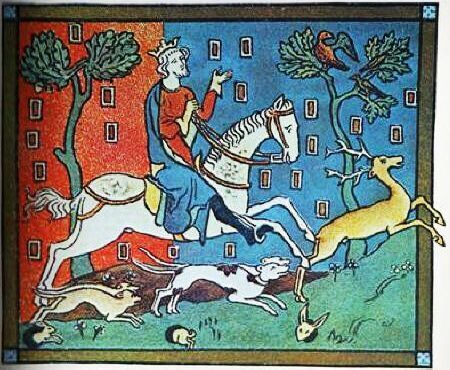
Caption: Bad King John: more interested in hunting than governing.

There was once a certain King who did nothing but tyrannise over his people, ruining the rich and maltreating the poor, so that all his subjects, day and night, implored deliverance from his evil rule.
One day, returning from the chase, he called his people together and said, " Good people, I know that during my whole reign I have been a hard and tyrannical master to you, but I assure you that from henceforward you shall live in peace and at ease, and nobody shall dare to oppress you."
The people were overjoyed at this good news, and forbore to pray for the King's death as formerly.
In a word, this Prince made such an alteration in his conduct that he gained the name of "The Just," and every one began to bless the felicity of his reign.
One day one of his courtiers presumed to ask him the reason of so sudden and remarkable a change, and the King replied:
"As I rode hunting the other day, I saw a dog in pursuit of a fox, and when he had overtaken him he bit of one of his feet; however, the fox, lame as he was, managed to escape into a hole.
The dog, not being able to get him out, left him there ; but he had hardly gone a hundred paces, when a man threw a great stone at him and cracked his skull.
At the same instant the man met a horse that trod on his foot and lamed him forever; and soon after the horse's foot stuck so fast between two stones that he broke his leg in trying to get it out.
Then said I to myself, ' Men are used as they use others. Whosoever does that which he ought not to do, receives that which he is not willing to receive.'”
_______
Most remarkable is the king’s decision to announce he was changing his ways.
Imagine any politician doing that? No, I am not talking about the phony contrition, apology, etc while the promised change never happens.
I speak of a sincere commitment to the golden rule and to listen and to work for the people.
Kind John, depicted, was termed a Bad King because he preferred hunting to governing.
So, a step toward self-government, not necessarily a bad thing. Like the frogs who wanted a king who truly would “govern” them, got what they wanted and then some: a frog-munching stork.
I recall one boss who was so full of idea – many good ones - I was happy, nevertheless, when he stayed away from the office – I finally got time to do my own work!

*Source: Aesop's fables by Aesop; Griset, Ernest Henry, 1844-1907
London ; New York : Cassell, Petter, and Galpin 1874

© Copyright John Lubans 2020

Griset’s INDUSTRY AND SLOTH*

Posted by jlubans on March 08, 2022  •  Leave comment (0)

null

An indolent young man being asked why he lay in bed so long, jocosely and carelessly answered, "Every morning of my life I am hearing causes.
I have two fine damsels, their names are Industry and Sloth, at my bedside, as soon as ever I awake, pressing their different suits.
One entreats me to get up, the other persuades me to lie still; and then they alternately give me various reasons why I should rise, and why I should not.
This detains me so long, as it is the duty of an impartial judge to hear all that can be said on both sides, that before the pleadings are over it is time to go to dinner."

Many men waste the prime of their days in deliberating what they shall do, and bring them to a period without coming to any determination.

_____________

From well before the 1890s to the 1920s it was not unusual for a British gentleman, often classically educated, to not work.
Yet, he was hardly homeless.
If rusticated (kicked out) from Oxford or Cambridge, there were still those life-long friends from public school (like Eton or Dulwich College) to rely on.
He could be a dabbler at writing or painting, but nothing regimented or 9-5.
What permitted this life style?
A surplus of poor people looking for work and willing to work for little above room and board.
However, an enterprising valet or butler could do well, building a nest egg with tips from the young master's guests and graft from butchers, bakers and candlestick makers, and fish mongers and green grocers not to mention vintners.
It is said that a yearly allowance of 200 pounds sterling from the Governor – Dear Old Dad – could sustain in style the indolent youngster.
That 200 pounds is today the equivalent of well over 10,000 pounds .
The 200 pounds per year bought a pleasant apartment, a gentleman’s gentleman (think Jeeves) and membership in a men’s club.
Some gambled promiscuously and spent long, free, weekends at friends’ country estates, wearing bespoke clothing.
And, when so motivated, Reggie, Bertie, Ronnie or Alfie (or all four) could be found salivating at stage doors for the girls of the chorus to invite to dinner.
When in serious “trouble” Dad could be relied to fetch him out.
Paying one’s bills was another matter and much leeway was given by beleaguered tailors and restauranteurs.
With a little help from his friends the indolent could borrow money – a mutually reciprocating activity - until the next allowance installment.
As for the chorus girls, well, a quiet settlement for breach of promise could be had for a few hundred pounds from Dad.
Not infrequently, Dad could not stop the marriage and it was probably the best thing that ever happened to Reggie or Ronald or Bertie or Artie.
The ex-chorus girl took the poor sap in hand and guided him toward responsible behavior and on into the paths of righteousness.
Alas, this did result in un-employing the Jeeves.
But, as happens, the newly marrieds employed a butler and a few maids along with a cook.
Not long after World War I this type of living – apart from the Royalty – began to diminish.
All said and done, Griset's indolent young man did know enough to get up for dinner.

*Source: Aesop's fables by Aesop; Griset, Ernest Henry, 1844-1907
London ; New York : Cassell, Petter, and Galpin 1874

------------------
And, don’t forget Lubans' book on democratic workplaces, Leading from the Middle

© Copyright text by John Lubans 2022
Aesop’s “The Fox and the Turkeys*

Posted by jlubans on August 18, 2022  •  Leave comment (0)

null

A Fox spied some turkeys roosting in a tree. He managed to attract their attention and then ran about the tree, pretended to climb, walked on his hind legs, and did all sorts of tricks. Filled with fear, the Turkeys watched every one of his movements until they became dizzy, and, one by one, fell from their safe perch.
By too much attention to danger, we may fall victims to it.”
______________
La Fontaine, in his version, sets forth the moral:
“A foe, by being over-heeded,
Has often in his plan succeeded.”
While Reynard the Fox may claim he can charm birds out of the trees as he “Walk’d on his hinder legs sublime” this is more about the turkeys’ willingly being bamboozled than about Mr. Fox’s deadly charms.
There’s recent research about the debilitating effect on one’s brain when in the willing throes of social media.
Or, many have found out that if you want to make yourself less miserable, stop watching cable news.
Social media, like Don Cuervo tequila, is not your friend, whatever the Don tells you.
So don’t get zuckered in and fall off your perch, shutter that iPhone and enjoy your personal world view.

*SOURCE: Aesop's Fables: A New Revised Version From Original Sources” WITH ILLUSTRATIONS
BY HARRISON WEIR, JOHN TENNIEL, ERNEST GRISET
AND OTHERS” New York : Frank F. Lovell & Company, c1884

© Copyright text by John Lubans 2022

Phaedrus. The Stone and the Man*

Posted by jlubans on April 20, 2018  •  Leave comment (0)

null
Aesop was sent one day by his master Xanthus to see what company were at the public bath.
He saw that many who came stumbled, both going in and coming out, over a large Stone that lay at the entrance to the bath, and that only one person had the good sense to remove it.
He returned and told his master that there was only one man at the bath. Xanthus accordingly went, and finding it full of people, demanded of Aesop why he had told him false.
Aesop thereupon replied that only he who had removed the Stone could be considered a man, and that the rest were not worthy the name.
___________
One moralist sums it up neatly: “A true man helps others.”
Why does the one man do what he does? He could, like the others, step over the stone and forget it.
Why does this “true” man take ownership and move the stone?
When I suggest you (the worker) should act like an owner, what is your response?
Hell, no! I am not paid enough to worry about anything outside my job.
Not my job!
In the workplace, the “true” person is one who - seeing something to be done - does it, regardless of his/her job description.
Humans helping (cooperating with) others make us unique and, while not everyone acts like an “owner” many do.
These many “owners” often make the difference in how an organization is perceived.
Hire “owners”; let others hire workers.

*Source: AEsop's fables / illustrated by Ernest Griset; with text based chiefly upon Croxall, La Fontaine, and L'Estrange. L.
London, New York: Cassell Petter and Galpin, [1869]

____________
For more fables to guide one’s leadership or followership – and how to deal with the stones in your path - get your copy of
.
For the cooperative reader, ask your library to order a copy!

© Copyright John Lubans 2018

Aesop’s The Boy and the Nettle*

Posted by jlubans on June 13, 2022  •  Leave comment (0)

null
Caption: Nettle Bread

A Boy was stung by a Nettle. He ran home and told his mother, saying: "Although it pains me so much, I did but touch it ever so gently."
"That was just it," said his mother, "which caused it to sting you. The next time you touch a Nettle, grasp it boldly, and it will be soft as silk to your hand, and not in the least hurt you."

Whatever you do, do with all your might.

_____________

Well, sure when it comes to nettles.
But, there’s no one way for all “whatever(s) you do”.
The wise person knows when to be gentle and when to be strong and assertive.
It’s situational and it takes experience and skill to know what you are up against and what your approach should be.
Emulating others who have had success (like the mother) and also practicing different techniques will help you build your arsenal.
Be multi-faceted in your dealings.
Unless it’s imperative, it might be best to stay away from nettles.
But, if you are collecting nettles to make nettle bread, then follow what Momma says.
I recently had some nettle-seasoned sourdough bread, baked in the Latvian countryside. I bought it an outdoor crafts fair. How did I know to buy bread at that stand among dozens of other bakers? The long line!
My purchase stayed moist for days and had a subtle, likable flavor to the very end.

*SOURCE: Aesop's Fables: A New Revised Version From Original Sources” WITH ILLUSTRATIONS
BY HARRISON WEIR, JOHN TENNIEL, ERNEST GRISET
AND OTHERS” New York : Frank F. Lovell & Company, c1884

------------------


Copyright. John Lubans. 2022

Phaedrus’ THE ASS DERIDING THE BOAR*

Posted by jlubans on March 04, 2019  •  Leave comment (2)

null
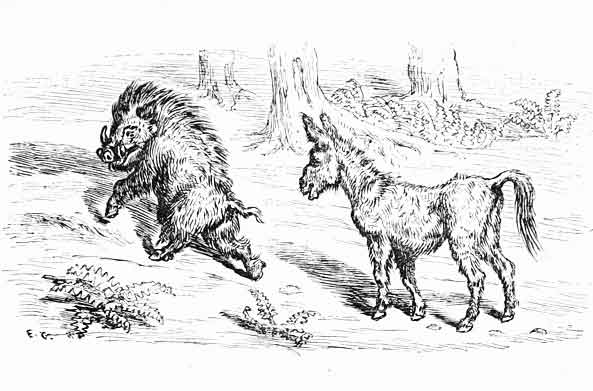
Caption: Drawing by Ernest Griset (1874)

Fools often, while trying to raise a silly laugh, provoke others by gross affronts, and cause serious danger to themselves.

An Ass meeting a Boar: “Good morrow to you, brother,” says he.
The other indignantly rejects the salutation, and enquires why he thinks proper to utter such an untruth.
The Ass, with legs crouching down, replies: “If you deny that you are like me, at all events I have something very like your snout.”
The Boar, just on the point of making a fierce attack, suppressed his rage, and said: “Revenge were easy for me, but I decline to be defiled with such dastardly blood.”

_________________
One moralist explains the wisdom behind not responding vengefully: “it takes off something from the reputation of a great soul, when we see it is in the power of a fool to ruffle and unsettle it.”
The boar responds but only on his own terms. Likely, the ass is left sitting on his hind quarters puzzling over the boar’s lofty language.
Foolish speech can be countered with wit; no need to go to war.

*Source: THE COMEDIES OF TERENCE AND THE FABLES OF PHÆDRUS.
TRANSLATED By HENRY THOMAS RILEY, B.A.
TO WHICH IS ADDED A METRICAL TRANSLATION OF PHÆDRUS,
By CHRISTOPHER SMART.
LONDON: GEORGE BELL & SONS, 1887.

__________
My book, Fables for Leaders is only a click away:


Also, My 2010 book, Leading from the Middle, is available at Amazon.

© Copyright John Lubans 2019

Aesop’s The Ass and his Purchaser*

Posted by jlubans on September 20, 2022  •  Leave comment (0)

null
A man wished to purchase an Ass, and agreed with its owner that he should try him before he bought him.
He took the Ass home, and put him in the straw-yard with his other Asses, upon which he left all the others, and joined himself at once to the most idle and the greatest eater of them all. The man put a halter on him, and led him back to his owner, saying: "I do not need a trial; I know that he will be just such another as the one whom he chose for his companion."
A man is known by the company he keeps.
________
Organizationally, I would be disappointed if a new hire gravitates to the least productive member of the organization.
When I was a bus boy and a golf caddy – the hotel and the golf course each had the equivalent of a “caddy shack” - I was always keen to to figure out how things worked.
Usually, there was an “old boy” (in some cases an "old guy", a "lifer") who had figured out how to work the system.
Not that I would follow his example, but it did help me to understand the “culture”, who to watch for, who to avoid and how to stay out of trouble.
More disappointing in this age of “double dipping" (working two jobs during the 40 hours of one full time job), “quiet quitting”, the Great Resignation, and “quiet firing”, is learning that the least productive are still in the office.
Who’s really not doing his/her job?

*SOURCE: Aesop's Fables: A New Revised Version From Original Sources” WITH ILLUSTRATIONS
BY HARRISON WEIR, JOHN TENNIEL, ERNEST GRISET
AND OTHERS” New York : Frank F. Lovell & Company, c1884

------------------
My book, Fables for Leaders is available. Click on the image and order up!

And, don’t forget Lubans' book on democratic workplaces, Leading from the Middle

© Copyright text by John Lubans 2022
Aesop’s THE MADMAN WHO SOLD WISDOM*

Posted by jlubans on August 26, 2022  •  Leave comment (0)

null
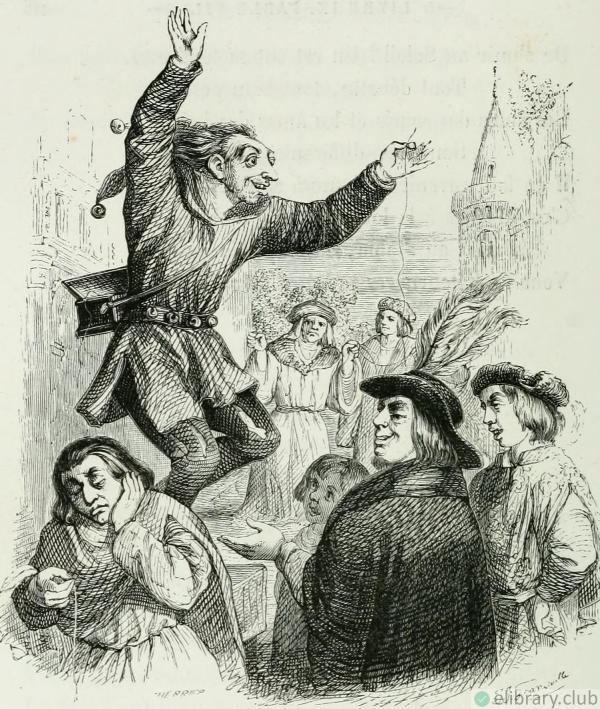
Caption: Ouch! (lower left) Illustration by Jean Jacques Grandville (1803-1847) from a collection of fables by Jean de La Fontaine (1621-1695) published during 1838-1840.

A Madman once set himself up in the market place, and with loud cries announced that he would sell Wisdom.
The people at once crowded about him, and some gave him gold for his wares, but they each got only a blow on the ear and a bunch of thread, and were well laughed at by their companions.
One of them, however, took it more seriously than the others, and asked a wise sage what it meant.
"It means," said the sage, "that if one would not be hurt by a Madman, he must put a bunch of thread over his ears."
So the Madman was really selling Wisdom.”
________________
LaFontaine’s retelling provides
a clue as to the inherited Wisdom:
“People of sense infallibly
Between themselves and madmen place
At least some fathoms of this lace;
Or else they will a buffet gain.”
Those of us less sagacious, may ask: How many fathoms of thread or lace?
“Some” we are told; another, “two” and a third – having endured a drubbing, no doubt, - prescribes “forty yards of common thread”.
In brief, keep your distance from the deranged.
Am I referring to cable news and all their “mad men” (and women)?
Maybe, but a “blow upon the ear” for the viewer/listener rarely leads to wisdom other to avoid cable news.

*SOURCE: Aesop's Fables: A New Revised Version From Original Sources” WITH ILLUSTRATIONS
BY HARRISON WEIR, JOHN TENNIEL, ERNEST GRISET
AND OTHERS” New York : Frank F. Lovell & Company, c1884

------------------
My book, Fables for Leaders is available. Click on the image and order up!

And, don’t forget Lubans' book on democratic workplaces, Leading from the Middle

© Copyright text by John Lubans 2022

Aesop’s THE TWO FROGS

Posted by jlubans on June 01, 2019  •  Leave comment (0)

null
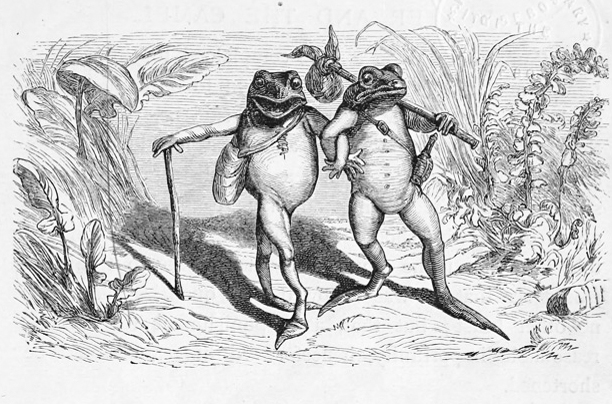
Caption: The two on a stroll. Illustration by Ernest Henry Griset. 1884

Two Frogs were neighbors.
One lived in a marsh, where there was plenty of water, which frogs love: the other in a lane some distance away, where all the water to be had was that which lay in the ruts after rain.
The Marsh Frog warned his friend and pressed him to come and live with him in the marsh, for he would find his quarters there far more comfortable and—what was still more important—more safe.
But the other refused, saying that he could not bring himself to move from a place to which he had become accustomed.
A few days afterwards a heavy wagon came down the lane, and he was crushed to death under the wheels.
____________
And so it can be at work.

Why stay in an “accustomed” rut? Let me count the ways and whys.
Oh yes, the reasons to hang on (even when the ground is shaking from the approaching cart wheels) will be multitudinous. A list so long, no one in his or her right mind would leave.
Au contraire, mon ami, All you have to do is leave.
I admire anyone who concludes: “This is not working. I am gone." Adios amigo, goes the song.
Of course, you want to think about it, but don’t think too long. Pack your bags, buy that Greyhound ticket, and start fresh.
If life’s an adventure, aren’t you capable? Of course you are.

*Source: AESOP'S FABLES A NEW TRANSLATION BY V. S. VERNON JONES WITH AN INTRODUCTION By G. K. CHESTERTON AND ILLUSTRATIONS BY ARTHUR RACKHAM (Publisher: London: W. Heinemann; New York: Doubleday, Page & Co., 1912). Available at Gutenberg.

__________
SALE! SALE! SALE! SALE! SALE! 30% Off; type in "Summer inventory SALE" at Checkout. ENDS JUNE 30.
ONLY a click away:


And, My 2010 book, Leading from the Middle, is available at Amazon.

© Copyright John Lubans 2019

Aesop’s The Oxen and the Axle-Trees*

Posted by jlubans on August 20, 2022  •  Leave comment (0)

null
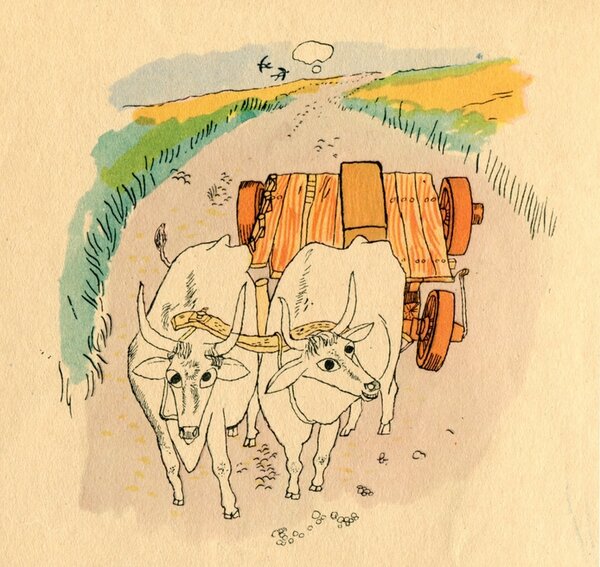
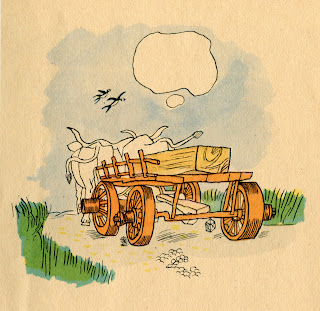
Caption: Illustration by Fulvio Bianconi, 1946.

A HEAVY WAGON was being dragged along a country lane by a team of Oxen.
The axle-trees groaned and creaked terribly, when the oxen, turning round, thus addressed the wheels:
Hallo there!
Why do you make so much noise?
We bear all the labor, and we, not you, ought to cry out.
Moral: Those who suffer most, cry out the least.
_________
Why is that? Is martyrdom preferable to getting your grievances taken care of?
If it is true that “the squeaky wheel gets the grease”, maybe the oxen need to heed that folksy saying.
Or is there virtue in suffering quietly?
In the workplace, my suffering in silence was unlikely to receive attention or help from any of my bosses.
Of course, you can over-do the martyr bit.
One department head with whom I met monthly would invariably list out all the bad things being done to her department. For her, our meeting was an opportunity to vent about seemingly insurmountable problems.
Not once did she comment on the good things done for her unit.
While I was annoyed - eventually to distraction by her belly-aching - I should have intervened early on but failed to do so.
I remember one of my bosses – Leo Cabell, a great guy - when I was an assistant director at the University of Colorado’s Norlin Library telling me: “Don’t bring problems to me without solutions.”
That was among the best advice I’ve been given by anyone and I should have shared it with my whining department head.
Well, time to go. Let’s trundle on down the road.
null
*SOURCE: Aesop's Fables: A New Revised Version From Original Sources” WITH ILLUSTRATIONS
BY HARRISON WEIR, JOHN TENNIEL, ERNEST GRISET
AND OTHERS” New York : Frank F. Lovell & Company, c1884

Post Script:
null

A voice raised!
Unlike the frequent, often national, strikes in western Europe – think of work stoppages in Italy, France, UK - Latvians in the north rarely protest or strike.
They (we) are a bit like Aesop’s oxen.
My sculptor friend, Antons Rancāns, recently posted his wood sculpture from 2004 to promote teachers striking in Latvia; too long a time suffering in silence.
Here is his caption along with a translation.
Pietiek vergot! Jāstreiko!
"Latvijas skolotājs", koks, 2004.
(Enough of the slaving! We must strike!
"Teacher of Latvia", wood, 2004)

------------------
My book, Fables for Leaders is available. Click on the image and order up!

And, don’t forget Lubans' book on democratic workplaces, Leading from the Middle

© Copyright text by John Lubans 2022