Canyon Snapshots: Groups and the Resurrection Fern.
|
|
(This is vignette #5 from eight days on the Lower Canyons of the Rio Grande in Texas in early November 2013. I was one of 11 expertly guided by Burt Kornegay. We paddled 6 fully laden canoes 90 miles, hiked into arroyos and side canyons, marveled at the blooming cacti of all persuasions, and prayed to the sun, after three days of cold drizzle, to dry out our muddy, soggy gear!)

Caption: New Portage Record – 38 minutes! (Photo by Burt Kornegay.)
Humans voluntarily form groups. The group is always action oriented; it wants to do something, at least initially, and works to achieve that something. Disagreements can occur about leadership, around the goal and who is going to do what, around individual duties and group decisions. So how did our dozen do?
Our flotilla was hardly self-managing. We had a strong leader, Burt. Indeed, he was designated, “Master of the Vessel” under Homeland Security law for the border between Mexico and the USA. And, we subordinated ourselves to his expertise on just about everything. If Burt said we were stopping for the night on a tilted rocky shore with mucky access, we stopped, dragged the canoes up the slithery slope and camped for the night. No one suggested going on and looking for Elysian Fields – I was tired and glad to stop! When Burt – who did more than anyone - asked for help with setting up, cleaning up or loading the boats, he got it. Sometimes he didn’t say please, and he still got the help. There was little about the trip up for discussion. We were told, nicely, who was boating with whom, and who would be in the bow and who in the stern. Burt assigned the sweep duty (the last boat) to the most experienced paddlers. I paddled with four different people in the stern – it was fine with me since steering from the stern was not my forte. I was determined to do a good job in the bow and did improve over the 8 days.
I can say everyone, including me, did more than their fair share. I do wonder how this dynamic came to be. Toward the end of the trip, Burt remarked, unlike most groups, ours got off to an early start each day, by as much as an hour or more, and then, as depicted, we claimed the portage record!
Now, were we a really together group, a highly effective team? Not really. Did we have great camaraderie? Not really. At parting, few fell around each other’s necks. We liked each other – we were pleasant to each other – and our politeness seemed to smooth over any tension.
One source of tension, for me, was people scouting out tent sites during the nightly camp set up time. Since I was solo, I noticed – aye, pettily enough - that couples would invariably split with one helping set up the kitchen and gather firewood and the other finding a good tent spot. By the time I got to set up my tent, I’d be too close to another tent, or in a too rocky, too uneven, too far-away site. Being at a distance was OK on starry nights, but less so on dark nights when the slog for the “shovel” – we ate bodacious quantities of fibrous food – was an extra 75 yards through mud flats. Once, I got a cushy, sandy site – about 100 yards away from the campfire. But, I slept fitfully, lurching awake at every rustle. The Lower Canyons segment of the Rio Grande has its share of mountain lions and wild bulls.
We never did debrief as a group about how things were going, but that did not impede how we worked with each other – no factions or fissures developed. Perhaps that was due to the strong leader – there was no need for decision-making or discussion by the group. I do wonder what would have happened had our leader become incapacitated – there was no shortage of executive power in the group. How would we transition to a new leader?
What type of group were we? We were a good “working group” – our sole purpose was to derive personal benefit from our activity and we worked toward that purpose. Organizationally, we were, in military terms, a “squad”, 8-13 in number, under one commander.
There is a downside to the dominant leader model. Since we were guided, there were times when I saw something unfolding and not really knowing – lacking expertise - what to do and I’d defer to the leader. It’s what happens when followers become subordinate; they surrender their part in leadership. I found myself asking, “Should I jump in and try to help or should I stand by?” Frankly, I felt doltish at times standing there. If I had been with a group of equals, I think when a mate went drifting past tangled up in a rope; I would jump in to help – maybe not the smartest thing to do, but that would be my proactive inclination.
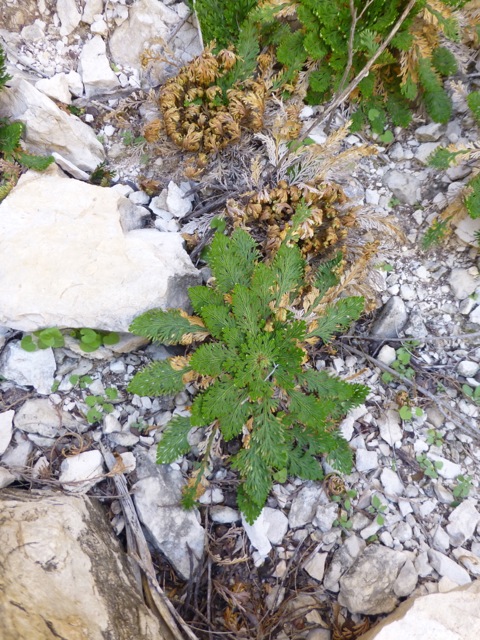
Caption: The resurrection fern. With rain, the brown, desiccated fern unfurls into a green glory. So it can be when we encourage growth in others.
Leading from the Middle Library of the Week: The Chinese University of Hong Kong.
Copyright John Lubans 2014
Caption: New Portage Record – 38 minutes! (Photo by Burt Kornegay.)
Humans voluntarily form groups. The group is always action oriented; it wants to do something, at least initially, and works to achieve that something. Disagreements can occur about leadership, around the goal and who is going to do what, around individual duties and group decisions. So how did our dozen do?
Our flotilla was hardly self-managing. We had a strong leader, Burt. Indeed, he was designated, “Master of the Vessel” under Homeland Security law for the border between Mexico and the USA. And, we subordinated ourselves to his expertise on just about everything. If Burt said we were stopping for the night on a tilted rocky shore with mucky access, we stopped, dragged the canoes up the slithery slope and camped for the night. No one suggested going on and looking for Elysian Fields – I was tired and glad to stop! When Burt – who did more than anyone - asked for help with setting up, cleaning up or loading the boats, he got it. Sometimes he didn’t say please, and he still got the help. There was little about the trip up for discussion. We were told, nicely, who was boating with whom, and who would be in the bow and who in the stern. Burt assigned the sweep duty (the last boat) to the most experienced paddlers. I paddled with four different people in the stern – it was fine with me since steering from the stern was not my forte. I was determined to do a good job in the bow and did improve over the 8 days.
I can say everyone, including me, did more than their fair share. I do wonder how this dynamic came to be. Toward the end of the trip, Burt remarked, unlike most groups, ours got off to an early start each day, by as much as an hour or more, and then, as depicted, we claimed the portage record!
Now, were we a really together group, a highly effective team? Not really. Did we have great camaraderie? Not really. At parting, few fell around each other’s necks. We liked each other – we were pleasant to each other – and our politeness seemed to smooth over any tension.
One source of tension, for me, was people scouting out tent sites during the nightly camp set up time. Since I was solo, I noticed – aye, pettily enough - that couples would invariably split with one helping set up the kitchen and gather firewood and the other finding a good tent spot. By the time I got to set up my tent, I’d be too close to another tent, or in a too rocky, too uneven, too far-away site. Being at a distance was OK on starry nights, but less so on dark nights when the slog for the “shovel” – we ate bodacious quantities of fibrous food – was an extra 75 yards through mud flats. Once, I got a cushy, sandy site – about 100 yards away from the campfire. But, I slept fitfully, lurching awake at every rustle. The Lower Canyons segment of the Rio Grande has its share of mountain lions and wild bulls.
We never did debrief as a group about how things were going, but that did not impede how we worked with each other – no factions or fissures developed. Perhaps that was due to the strong leader – there was no need for decision-making or discussion by the group. I do wonder what would have happened had our leader become incapacitated – there was no shortage of executive power in the group. How would we transition to a new leader?
What type of group were we? We were a good “working group” – our sole purpose was to derive personal benefit from our activity and we worked toward that purpose. Organizationally, we were, in military terms, a “squad”, 8-13 in number, under one commander.
There is a downside to the dominant leader model. Since we were guided, there were times when I saw something unfolding and not really knowing – lacking expertise - what to do and I’d defer to the leader. It’s what happens when followers become subordinate; they surrender their part in leadership. I found myself asking, “Should I jump in and try to help or should I stand by?” Frankly, I felt doltish at times standing there. If I had been with a group of equals, I think when a mate went drifting past tangled up in a rope; I would jump in to help – maybe not the smartest thing to do, but that would be my proactive inclination.
Caption: The resurrection fern. With rain, the brown, desiccated fern unfurls into a green glory. So it can be when we encourage growth in others.
Leading from the Middle Library of the Week: The Chinese University of Hong Kong.
Copyright John Lubans 2014
 John Lubans - portrait by WSJ