Duds and Grandees

Posted by jlubans on December 21, 2023  •  Leave comment (0)

20231221-rsz_1rsz_1rsz_1377582668_634593048818249_8206021981106061097_n.jpg
Caption: Grand Opening. Get Your Own Dud!

A fictional Scotland Yard heavyweight in a 1933 mystery novel offers an organizational insight:
"Promotion by routine is the ruin of every public service.
I know only one thing worse, and that is the promotion of a 'dud' into some other service because he stands in the line of promotion.
All the (UK's) public offices, from the F(oreign) O(ffice). downwards, are guilty of it."*
Obviously, it is the author, Sir Basil Thomson, finding fault and anticipating the Peter Principle. He should know, as he was once an Assistant Commissioner at Scotland Yard.
That role and several others in his varied career gave him an up-close view of what many of us, as employees, have experienced.
As you may know, the Peter Principle from 1969 holds that each of us "will eventually rise to our unique level of incompetence".
Many of us know this is anecdotally true, as did Thomson, certainly as it may apply to others!
I gave my take on it in a 2011 post Which Is Incompetent, the Job or the Boss?
Thomson's is one of the earliest "police procedurals". In P.C. Richardson's First Case, he anticipates Parkinson's Law (1955) that "work expands to fill the time allotted for its completion."
Constable Richardson, a raw beginner but brilliant policeman, soon discovers that all of his pounding of pavements and questioning of dissembling witnesses (aka "real work") has to be memorialized on paper.
That report, among a flurry of others, is then to be read by the chain of command which may include a half dozen office holders - the loftier your position, the greater the pile of reports on your desk.
Small wonder Parkinson's Law helps explain - based on historical facts and figures - why "Every new worker, doing real work, resulted in the employment of two office workers."
As most workers know, overtime, bureaucracies tend to grow incrementally; rarely, if ever, to shrink.
My blog "Double, Double (Administrative) Toil and Trouble" relates my personal experience with these tendencies.
Many of my students are reluctant to believe, fully, Parkinson or Peter (and, if I asked them, they'd be just as incredulous about Sir Thomson's views).
Indeed, Parkinson and Peter found it essential to use humor to sugar coat the raw truth. They confirm what we have long suspected, like Sir Thomson, but offer no remedies.
Krylov (1768-1844) uses his Grandee fable
to illustrate at least how one person - promoted to his level of incompetence - managed to do little damage by doing nothing.
Upon his death, at the Pearly Gates, the Grandee seeks admission into Heaven. He is quizzed as to who he is and what he did while on Earth:
"I was born in Persia, and my rank was that of a Satrap. But, as my health was feeble during my lifetime, I never exercised any personal control in my province, but left everything to be done by my secretary."
"But you, what did you do?"
"I ate, drank, and slept; and I signed everything he set before me."
"In with him, then, at once into Paradise!"
The gate keeper explains his decision to a dumbfounded colleague: "The dead man was a fool. What would have happened if he, who had such роwer in his hands, had unfortunately interfered in business?
Why, he would have ruined the whole province."
If you are indeed promoted into incompetence, there may be something to the Grandee's approach. Do no harm.
This fable was the most censored - no surprise - by the minions in the Russian Empire.
The Czar upon hearing this fable from Krylov's lips, "took him in his arms, kissed him, and said, "Write away, old man, write away."
*Excerpt from P.C. Richardson's First Case by Basil Thomson (1933)

__________
20231208-rsz_1rsz_homer-santa-claus-layered-design-for-cutting-598_1024x10242x.jpg
ONLY a click away, barely in time for gift giving :
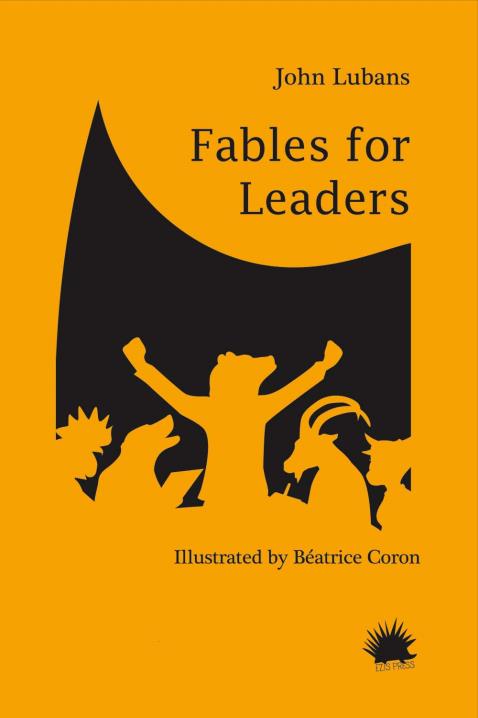
And, for nuanced insights about leadership Leading from the Middle, is available at Amazon.
Copyright John Lubans all text 2023

"Unpack That Nuance", please!

Posted by jlubans on December 13, 2023  •  Leave comment (0)

20231213-rsz_naughty_lists-nice_lists-santa_claus-saint_nick-st_nick-seasonal-celebrations-wj900326_low.jpg

The BBC told us in mid-November that renowned folk singer, Buffy Sainte-Marie, might not be what she has long claimed to be: an indigenous person born in 1941 into the Piapot First Nation reserve in Saskatchewan, Canada.
A CBC documentary counters otherwise, namely, with a birth certificate that shows that she was born in Stoneham, Massachusetts, USA as Beverly Jean Santamaria to "white" Italian parents.
(Interestingly, at least to me, Ms. Sainte-Marie, minus the feathers and beads, looks a lot like a cute girl with whom I went to high school near Boston MA; her last name was Pasquale.)
Tip-toing around the charge of being a rank imposter, the BBC, suggests she might be a "pretendian". What's that?
Michelle Cyca, a "freelance indigenous journalist from the Muskeg Lake First Nation" states, "We should respect the Piapot Nation and their laws ... but it doesn't cancel out everything she has said when she was building her career," ... "It is important that we are able to unpack that nuance."
I am reminded of people in my career who made much of their ability to deal with nuance; indeed it (having nuance "creds") was a positive for academic employment vs. someone who said outright what they believed.
The nuanced argument can give wafflers an unfair advantage over someone who says in plain English "this is what I see".
For me, perhaps facetiously, someone professing to being nuanced was as big a red flag as a work colleague wearing a bow-tie.
(For background, it is claimed by the fashionable that one can never trust a bow-tie wearer. And while little evidence is presented, my experience with bow-tied architects, lawyers, and consultants suggests there may be something to this yarn.)
In my business, the un-nuanced are deemed less capable than the person who straddles the fence, such as what we see with Ms. Sainte-Marie's defenders.
Cyca elaborates: "Being indigenous is not just a biological detail," ... "It is a political affiliation, it is a matter of citizenship."
Right.
Now if this charge were leveled at Elvis Presley, that he actually was born as Henry Schwarz in Reading, Pennsylvania (north of the Mason-Dixon line) and not in Tupelo, Mississippi, I might be in denial instead of going on about nuanced excuses.
Tangentially, does (did?) Ms. Sainte-Marie experience the so-called Imposture Syndrome?
While not directly related to someone faking who they are, many leaders - it is said - do sometimes question their success and have doubts that their achievements are more due to good luck than to inherent characteristics and hard work.
I certainly did at times.
I had such good fortune early on, it all seemed easy; that promotion and recognition came my way smoothly.
But, while I had my doubts, I also knew down deep that I worked hard and put in many hours in research, reading, writing, teaching, and on the job as an administrator.
No doubt, Sainte-Marie - "I know who I am" - will keep on keepin' on. Her fans are legion, we are told, and if they are woke enough they will not fail to "unpack that nuance."
As Bard algorithm-makers would have us believe: "Buffy Sainte-Marie's identity and ancestry is complex and still evolving. While the birth certificate (for Beverly Jean Santamaria) discovery sheds new light on her biological origins, it doesn't diminish her contributions to Indigenous culture and social activism."
The Bard-istas just can't bring themselves to say, "cultural appropriation".
__________
20231208-rsz_1rsz_homer-santa-claus-layered-design-for-cutting-598_1024x10242x.jpg
ONLY a click away, in time for gift giving :

And, for nuanced insights about leadership Leading from the Middle, is available at Amazon.
Copyright John Lubans all text 2023

In Motion

Posted by jlubans on December 08, 2023  •  Leave comment (1)

<br />
Insert photo
Caption: Latvia's basketball team's head coach Luca Banchi greets supporters in Riga, Latvia, Sept. 11, 2023. The team finished 5th (out of 32 national teams) at the 2023 FIBA World Cup. (Photo by Edijs Palens)

I asked AI's Bard for Luca Banchi's "secret sauce" for coaching Latvia's basketball team to unprecedented heights. This time, Bard got it pretty much right, absent any sources, of course:
"Banchi refused to accept that Latvia was a minnow on the world stage. He believed that the team could compete with the best, and he instilled that belief in his players."
"Banchi gave his players the freedom to make decisions on the court, which helped them to develop their confidence and their ability to play under pressure.
Banchi's "secret sauce" is a combination of all of these factors."
Bard does fail to mention "kustībā" which is Latvian (and the Italian Mr. Banchi's favorite Latvian word) for "in motion".
When I reviewed several of the highlights reels of Latvia's victories, I perceived a great deal of kustībā - the ball got passed at a head snapping velocity and accuracy multiple times all over the court. Often, the final recipient managed a score. I saw much sharing and little egotism.
For example, star player Artūrs Zagars set the World Cup record for most assists in a single game with 17.
Mr. Banchi, now a national hero in Latvia, offered - tirelessly - multiple interviews to an enthralled nation.
Banchi said his goal as a coach was "to make the players autonomous ..."
"More than once he said his team 'doesn't need a coach any more' after a win over Brazil."
Earning the World Cup's Best coach award, he said that "it is not for the coach, it is a prize for the best team."
When asked for influences on his coaching philosophy, he cited a 2013 book: "Legacy: What the All Blacks Can Teach Us About the Business of Life" by James Kerr.
Legacy breaks down how New Zealand?s rugby team
consistently wins far more often than loses and the leadership philosophy behind the winning.
Early on the All Blacks moved away from a top-down leadership and " transfer(red) the leadership from senior management to the players...they play the game and they have to do the leading on the field. The traditional 'you and them' became 'us'."
For the All Blacks, "(s)hared responsibility means shared ownership. A sense of inclusion means individuals are more willing to give themselves to a common cause."
Which, coincidentally, pretty much sums up my Letting Go
theory
, a leadership principle I practiced my entire career. So, I am not put off by the notion of a manager allowing workers to make decisions, allowing workers to strive for best practices; in other words expecting workers to think and act for themselves and the organization.
Sure, that puts you at risk but only in organizations wedded to the hierarchy - think micromanaging - and fearful of sharing the decision-making power.
Alas, I worked in several organizations like that and while for the most part my philosophy was tolerated by a few of my bosses it was threatening to many top-down managers.
They were never going to declare that their unit, department or team, "doesn't need a coach any more"!
While the top-down style can keep any company going, I feel like it fails to unlock a much greater potential and higher productivity.
But, and there is always a but, I could have done my brand of "letting go" better. By that, I mean enlightening, empowering and equipping staff to be let go. I should have done more, like the All Blacks , in developing a culture of honesty, authenticity and safe conflict.
__________
20231208-rsz_1rsz_homer-santa-claus-layered-design-for-cutting-598_1024x10242x.jpg
ONLY a click away, in time for gift giving :

And, for a variety of insights about letting go Leading from the Middle, is available at Amazon.
Copyright John Lubans all text 2023