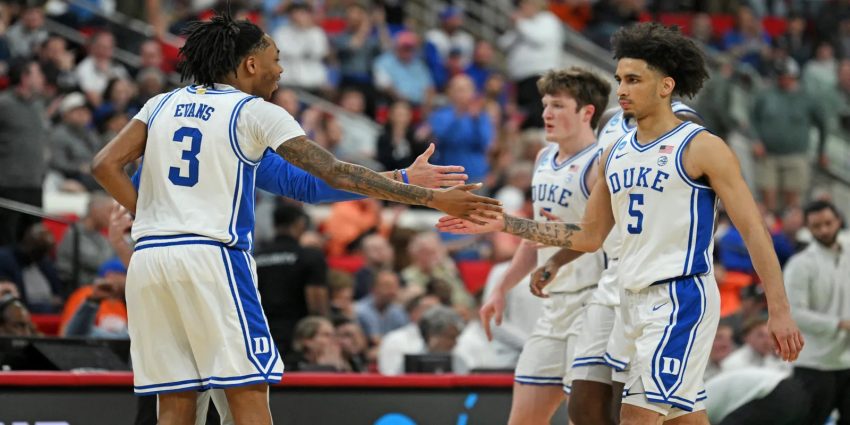
Teamwork rituals from the basketball team to the work team which are discussed below: Sportsmanship, win or lose. Free throws/penalty shots. Subbing out. Circling up. Helping hands, Communication-Talking and Information hoarding.
I understand there are readers whose least favorite class was PE (gym) and who cringe at any linking of sports to the workplace. Bear with me; you might come to agree that there are some metaphors and activities worth illustrating and considering how they might transfer to the workteam.
Afterall, workplace teams are now common and have been increasingly so since the 1970s. Their popularity stems from the finding that a “team relies on the diverse skills of its members and a high degree of coordination to achieve results that no single member could produce alone”. (Emphasis added.)
And, I have been wondering, as a writer and teacher, if sports rituals can transfer to the workplace? But, first a caveat. rituals alone won’t make for a winning team. But, if you have a high performance team (one that gets stuff done well and fast) the rituals serve to reinforce team culture.
OK, what rituals?
Sportsmanship.
Interestingly, at the end of every basketball game the winners and losers line up and exchange high fives with the opposing team and coaching staff. It’s a tangible demonstration of good will and of sportsmanship.
How to apply this On The Job (OTJ)?
Do we ever do something like this at work with opposing departments and viewpoints? Rarely. Only a few of my coworkers would take part in high fiving, hand slapping, or circling up with a team chant. They might, of course, be okay with a group hug, but that’s not exactly what we need in the workplace to overcome gossip, backbiting and information hoarding.
Free throws.
If someone fails at work, not unlike missing a free throw, there’s no touching on the job. In basketball, the four other players hand touch the player making the free throws. That touching, slap or fist bump, and sometimes talking, translates for a made shot into “Great job!” Or, after a miss, it says “Next one— we’ve got you.” Such words help offset any extra pressure. If you make the shot, great. If you miss, no blame, move on and get back into gear.
At work, we can see interactions that might benefit from a thumbs up, or an encouraging touch on one’s shoulder or elbow. Those small signs of support, of recognition have a positive psychological payoff just like on the court.
Subbing out.
Early on in learning the game, players are taught that when leaving the court they are to hand-slap with teammates, including coaches, on the bench. Why? It’s an energy handoff. The outgoing player transfers momentum and says “Keep it going.” The bench stays engaged instead of feeling separate from what is happening on the court.
OTJ? Slapping hands when subbing out? Probably not, but high fives could be used after a meeting which has gone well. Or, instead of a high five or fist bump, use encouraging words on a regular basis. Say something like: “Good job!” “Keep it up!” Likewise, when work teams change and new members sub-in and old members sub-out, there should be a welcoming and departing celebration to recognize previous efforts. And subbing out can be done with occasional reviews of how the team is working or not working. Where are we doing well? Where can we get better? The crucial point is to pause and reflect and not just keep on doing without reflection.
Savor the flavor and make adjustments. Keep what’s working, jettison what’s not.
Circle-Up Huddle
During Timeouts (30-60 seconds) the team circles up with the coach. The players and coach offer ideas. At the end, every player raises a hand and touches others prior to the return to play. Why? It is a quick reset and expression of unity. The coach outlines the tactical message while the up raised hands together reinforce that “We’re in this together!”
OTJ? The positive effect of circling up could be accomplished in a stand-up meeting. Those are kept short and the physical propinquity could be quite effective.
Any leaning away from the discussion, or day-dreaming, is easily observed in a stand up so the group probably is more focused than in a sit-down meeting.
Circling up declares, “We’re in this together.”
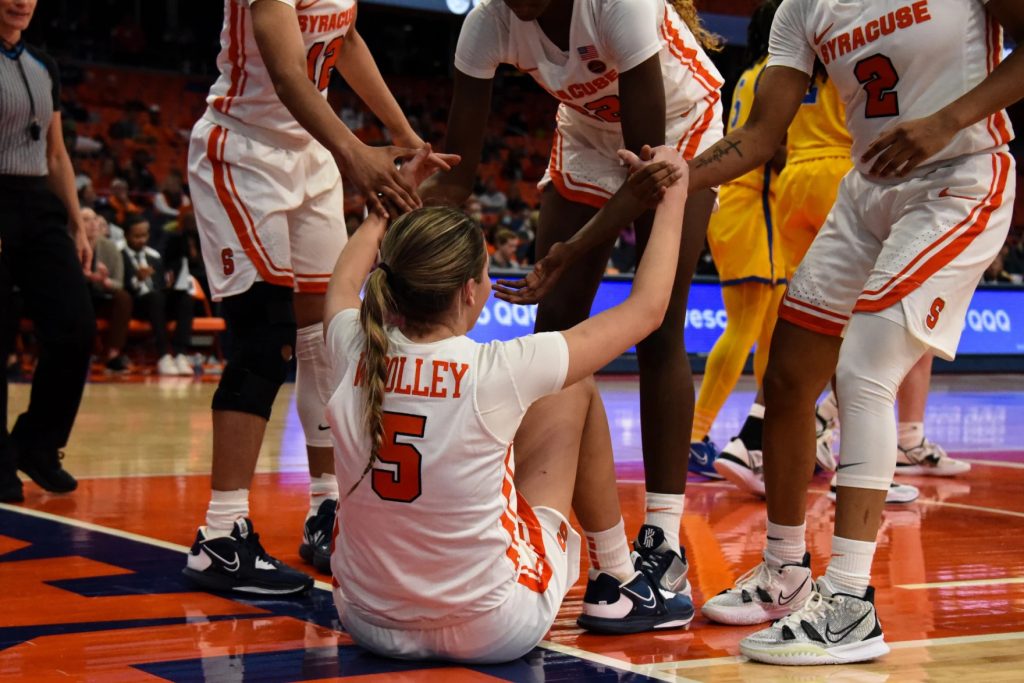
Helping hand.
It’s a given; when a players trips or is knocked down, his or her teammates all help, reaching out. No player has to struggle to get up, unassisted. On a rare occasion, I have even seen help offered to an opposing player.
In the workplace, helping hands are less frequent. Too often we turn our backs on colleagues who are in distress, self-made or organization-made. Is our non-help due to appearances, that the folks in power might not look kindly on your offering a hand-up?
Alas, workplace culture can inhibit teamwork. When raises and promotions depend on individual effort, competition trumps collaboration. The challenge for the leader (or coach) is to instill workplace rituals which recognize and augment high performance and teamwork.
While all basketball teams use rituals, there are clearly some teams that are superior to others. Superior teams not only have talent, they also have a dynamic that makes sharing the ball a top priority. Each player is looking out for other players.
The best players rise above their individual role and excel at awareness of where everyone is on the court and help in getting the ball to the player in the best spot to score. That may be the star, but often it is another team mate, hence the key metric of “assists” made is more important than the points per game statistic. Assisting on a workplace team is similar. Instead of looking out just for number one, the star performer and others look out for each other.
The boss’s job is to promote and enable that kind of superior teamwork.
Communicating. Talking!
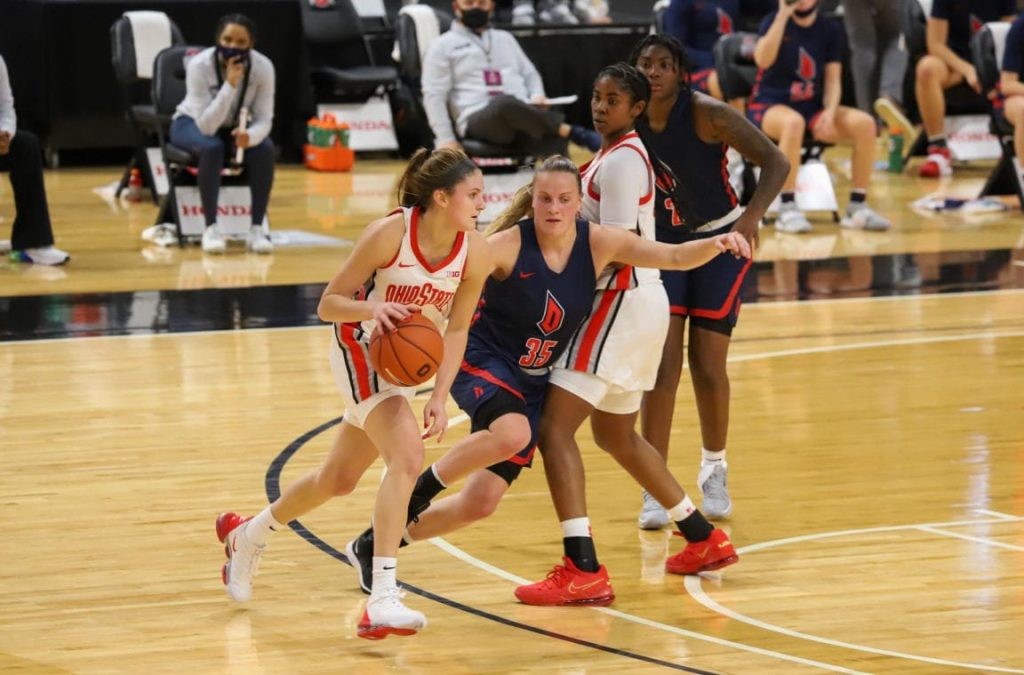
Caption: “Switching” Illustrated. Ohio State U. vs. Duquesne U.
While not a ritual per se, players’ talking – being vocal and communicatind – is a sine quo non for coaches.
Why?
Often, the most vocal teams – playing with confidence and unity – are the most successful. Coaches know that quiet teams are less cohesive and do not do as well as teams that talk.
All organizations demand effective communication; it fosters collaboration, builds trust, and enhances employee morale. When I was in the workplace, one constant gripe was that the administration, of which I was part, never communicated enough. We tried to do better.
But, communicating on or off the court is not a spontaneous given; it is “learned”. The coaches on my women’s team made clear what was expected in practice. It was an explicit belief – silence leads to isolation, to miscues among the players and a drop-off in the quality of teamwork. In practice, you’re expected to call out player names, make eye contact, and to talk through stressful parts of a scrimmage. Not all team members speak up. Some hoard information and introverts may be reluctant to speak up in a group dominated by an extrovert or are anxious about saying the wrong thing.
To counter this, coaches create drills so players can practice expressing themselves. The drills set up situations that require the players to use terms like “switch” (swapping the player you are defending with another defender), “help” or “screen” (a form of blocking).
From the coach’s perspective, the more talk, the better.
One shy player on the women’s team that I observed, had difficulty communicating. I suspected she was homesick – her family, including a sister on a different university team, lived a thousand miles away. And, her shyness was exacerbated by introversion.
Half way through the season her coach told me the player was finally “talking more, even if it is nonsense!” The team was glad to have her saying something, anything.
Far worse, on court or in the office, is the information hoarder, the player with valuable ideas and insights but who holds them back out of jealousy or other inimical reasons.
He or she is an un-glue player.
In effect this is sabotage. It is a behavior that, for the team to be highly effective, has to be confronted and reversed by the leader/coach. One player had this to say about one on one meetings with his coach: “Coach is always going to tell you the truth, no matter what it is. And just to know where you stand is good — whether it’s good or bad.”
Good leaders do not avoid uncomfortable conversations; they understand that avoidance results in dysfunction.
*One of my favorite chapters in my Leading from the Middle book is about a team. It’s entitled, “More Than a Game: A Season with a Women’s Basketball Team”. I saw that team develop over the 2001 season, games and practices, and I noted the many rituals in which the players took part; those rituals helped teamwork, instilled a sense of team and the idea that no one on the team was alone. That team went on to win its conference championship.
N.B. For other essays on numerous topics on leadership and literature and fables go to my Nucleus archive from 2010-early 2025.
© Copyright all text by John Lubans 2026
…workplace gossip, backbiting and information hoarding.
Ahh, the memories that even Xanax didn’t dull!
Thanks, Russ! I re-read my chpater on the women’s team and really enjoyed it. I had not read it for 15 years or so. If more sports teams behaved like workplace teams, they’d all be losers:)